Posts

Disaster Report: MIRACLE TRAIN - WELCOME TO THE OEDO LINE

Image
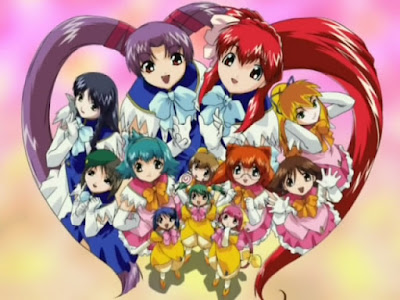
 Japan is famous worldwide for its ability to anthropomorphize anything for the sake of promotion.  People have written literal books on the subject, and the variety and specificity of their many, MANY mascots is a common subject of lighthearted ridicule online.  Not even anime is safe from this  phenomenon.  They’ve made anime about headphone mascots, pop cans, and the nations of the world, just to name a few.  There’s only one series that dares to give that sort of treatment to a Tokyo train line, though: 2009’s Miracle Train: Welcome to the Oedo Line .

The Story of Animerama: Cleopatra

Image
  A Thousand and One Nights didn’t come together quite as smoothly as Osamu Tezuka and Eiichi Yamamoto hoped, but they did manage to make a commercially successful film that captured some of the rebellious, experimental spirit of Mushi Production’s early days.  That experience meant that things could only improve for their next Animerama feature.  After all, they had an absolute slam dunk of a premise: the story of Cleopatra and her infamous affairs with Julius Caesar and Marc Antony.  With Tezuka at the helm and an experienced crew behind him, there was no way this could fail! Yet Cleopatra  would fail, due to factors both within and outside of Tezuka’s control.   Its failure marked the beginning of the end for both the Animerama project and Mushi Productions, and it would coincide with the lowest point in Tezuka’s animation career. ________________________ While Tezuka was generally pleased with how A Thousand and One Nights turned out, he was stil...

The Story of Animerama: A Thousand and One Nights

Image
Osamu Tezuka, Eiichi Yamamoto, and the rest of the staff at Mushi Productions had nothing but high hopes for the Animerama film series when it started.  They believed they could produce a film as lavishly animated as anything that had come out of Toei with cutting-edge content to boot.  In some ways, it felt like a return to the early days of the studio.  Just as before, though, those hopes were dashed by the realities and complications of making a feature-length animated feature.   The production of A Thousand and One Nights was marked by uncertainty, experimentation, indulgence, and chaos.   Perhaps the most remarkable thing about the film isn’t how it looks or the story it tells, but that the end result turned out so well in spite of its origins.

Disaster Report: Angel Tales

Image
There are many reasons behind what shows I choose to cover for Disaster Report.  Sometimes it may be due to its distasteful, even controversial content.  Perhaps it's because the show is poorly produced or adapted.  Occasionally it's because a show has a reputation for badness. Sometimes, though, you just randomly come across a show with a premise that demands you watch it, if simply to verify that such a thing actually exists.  That's the situation I found myself in when Anime Herald editor and bad anime connoisseur Samantha Ferreria brought up a long-forgotten harem series from 2001.  From the moment I heard the premise and saw its immensely cheap and shoddy opening, I knew I had to review it. After all, how could I resist a show about a hapless loser who gets a harem of girls who are both guardian angels and reincarnations of his dead pets with a dopey, childish title like Angel Tales ?

The Story of Animerama: A Fateful Meeting

Image
In the fall of 1967, Osamu Tezuka met with staff director Eiichi Yamamoto, who brought along with him his friend and former Mushi animator Gisaburo Sugii.   Tezuka  had received an interesting proposition earlier in the year that he wanted to discuss with them.   He had received an offer to make a series of feature-length animated films specifically targeted at adult audiences.   These films were meant for mainstream release not just in Japan, but in theaters worldwide.   Yamamoto and Sugii were intrigued by the idea but they also had serious concerns.   Who would be paying for such a venture?   Did they have enough time and animators at Mushi Productions to make such a thing happen?   Would the public accept such an idea? Tezuka listened to all their questions and concerns and responded with a single, calm statement: “We can do it.”  

The Story of Animerama: Origins

Image
In the 1960s, one of the first studios to make anime for television was Mushi Productions.  Towards the end of that decade, their desire to innovate would lead them to produce a trilogy of animated films under the label of “ Animerama .”  These films were a major gamble on their part, a means by which they could tap into both adult and international audiences.  This gamble ultimately ended in failure, and for many decades these films lingered in obscurity.  It’s only in recent years that modern viewers have been able to rediscover them and reassess their place in the history of Japanese animation. This is the first is a series of essays chronicling the history behind this ill-fated trilogy.  It will explore the careers of the two men who helped bring these films into existence, the fate of the studio that killed itself making them, and the legacy of their work on the Animerama films and beyond. This is the story of Animerama.

Nutcracker Fantasy

Image
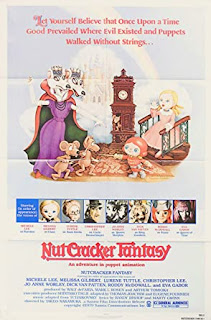
There are few stories that are more strongly tied to Christmas than that of The Nutcracker .  It has been impressed upon two centuries of children thanks to E.T.A. Hoffman's original story and Pyotr Tchakovsky's famous ballet.  It's been adapted dozens of times in just about every form of media you can think of, but few of those adaptations could hope to aspire to the beauty and strangeness of of the 1979 Japanese stop-motion feature Nutcracker Fantasy .