Posts

The Story of Animerama: A Fateful Meeting
Image
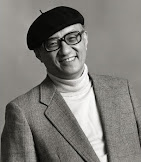
In the fall of 1967, Osamu Tezuka met with staff director Eiichi Yamamoto, who brought along with him his friend and former Mushi animator Gisaburo Sugii.   Tezuka  had received an interesting proposition earlier in the year that he wanted to discuss with them.   He had received an offer to make a series of feature-length animated films specifically targeted at adult audiences.   These films were meant for mainstream release not just in Japan, but in theaters worldwide.   Yamamoto and Sugii were intrigued by the idea but they also had serious concerns.   Who would be paying for such a venture?   Did they have enough time and animators at Mushi Productions to make such a thing happen?   Would the public accept such an idea? Tezuka listened to all their questions and concerns and responded with a single, calm statement: “We can do it.”  
The Story of Animerama: Origins

Image
In the 1960s, one of the first studios to make anime for television was Mushi Productions.  Towards the end of that decade, their desire to innovate would lead them to produce a trilogy of animated films under the label of “ Animerama .”  These films were a major gamble on their part, a means by which they could tap into both adult and international audiences.  This gamble ultimately ended in failure, and for many decades these films lingered in obscurity.  It’s only in recent years that modern viewers have been able to rediscover them and reassess their place in the history of Japanese animation. This is the first is a series of essays chronicling the history behind this ill-fated trilogy.  It will explore the careers of the two men who helped bring these films into existence, the fate of the studio that killed itself making them, and the legacy of their work on the Animerama films and beyond. This is the story of Animerama.

Nutcracker Fantasy

Image
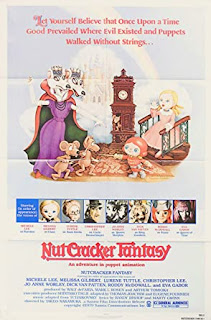
There are few stories that are more strongly tied to Christmas than that of The Nutcracker .  It has been impressed upon two centuries of children thanks to E.T.A. Hoffman's original story and Pyotr Tchakovsky's famous ballet.  It's been adapted dozens of times in just about every form of media you can think of, but few of those adaptations could hope to aspire to the beauty and strangeness of of the 1979 Japanese stop-motion feature Nutcracker Fantasy .

The Potluck Parable

Image
This post began as an in-joke between me and my husband, who was the one who came up with the analogy of ambrosia salad .  The rest just kind of grew from there; this is the end result.  Enjoy! Imagine any given season of anime as a potluck dinner.  Some of them are bigger or more diverse than others, but there's always a spread of dishes to pick from.

Disaster Report: WEISS KREUZ

Image
This story begins with a man named Takehito Koyasu. He's a prolific seiyuu best known these days as the voice of Dio Brando, but in the mid 1990s he was known and loved for voicing smug bishonen such as Hotohori in  Fushigi Yugi , Touga on Revolutionary Girl Utena , and Zechs Marquise on Gundam Wing .  He was enjoying a level of success at that time that only a handful of voice actors ever get to enjoy, but that was not enough for him.    He saw how much money producers were making off of the shows he worked on and wanted a cut of his own.  He also had an ego that demanded that the world recognize him and his other seiyuu friends not just as voice actors, but as superstars of many talents.  To achieve both of these goals, Koyasu need to create his own original work, and he already had a concept in mind.  It was a tale of four tormented young men fighting against the evils of the criminal underworld.  By day they worked as florists; by night they ...

Anime Secret Santa: THEY WERE ELEVEN

Image
This post is brought to you by this year's Anime Secret Santa.  Thanks to the folks at All Geeks Considered for hosting this year, and thanks to Evan Minto ( @VamptVo ) for the suggestion! For all the fuss that manga fans make over the Magnificent Forty-Niners, shockingly few of their works have made the leap to animation.  Keiko Takemiya has been the most fortunate, with three works total including two of her most notable manga.  Rikoyo Ikeda had two works that became landmarks in shojo anime.  Even Yumiko Ooshima got a lovely, lavish adaptation of her best-known work.  Meanwhile, Moto Hagio's contributions to anime have been limited to character designs for The Time Stranger (not to be confused with GoShogun: The Time Etranger ) and the 1986 adaptation of her 1974 short story They Were Eleven .

Disaster Report: JUNJI ITO COLLECTION

Image
An anime based on the works of Junji Ito should be a success by any measure.  Ito's combination of Lovecraftian horror stories combined with his spooky, heavily textured art has been a favorite of many for decades.  His works have only increased in popularity over the years, making him one of the very few horror mangaka to enjoy success outside of Japan.  Yet translating those works to motion seems to be another matter entirely.